
How Long Until a Tooth Infection Kills You? Warning Signs and Treatment
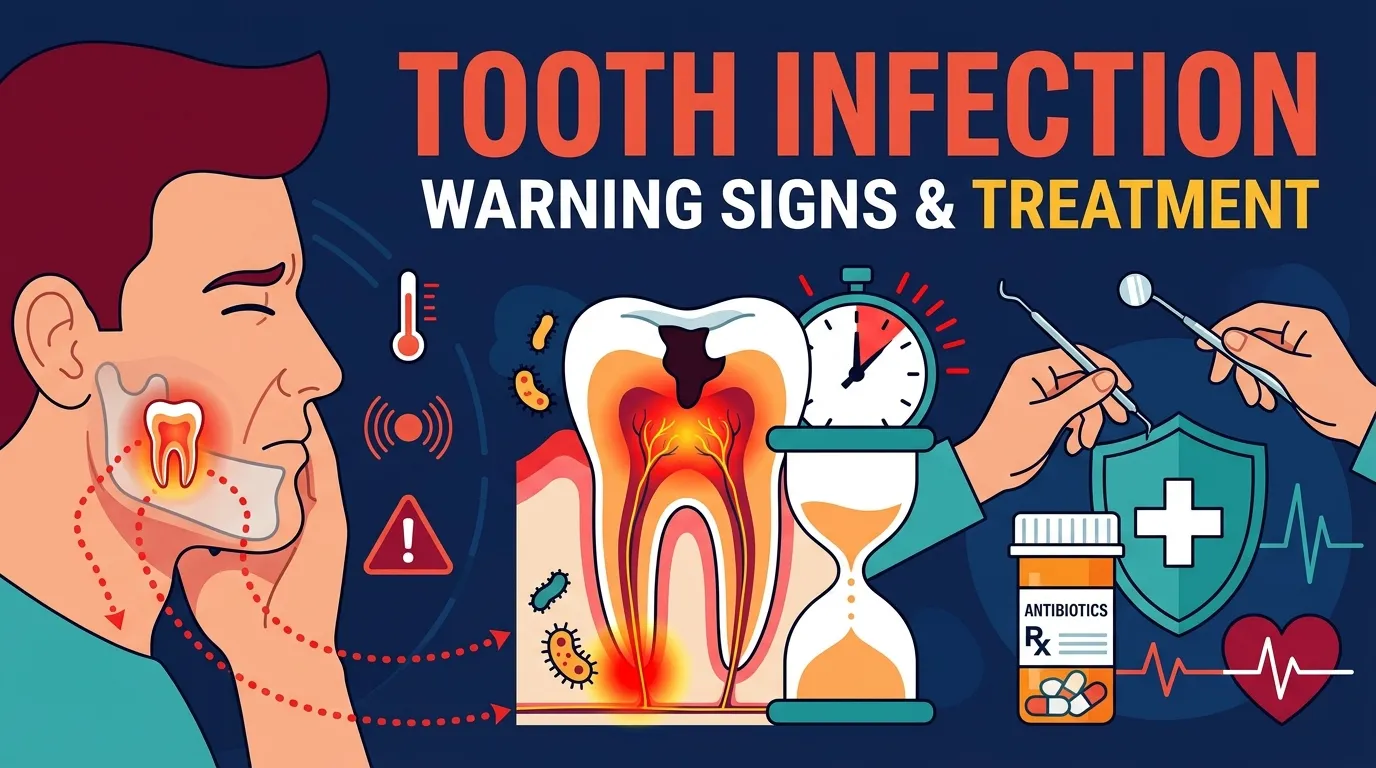
There is no reliable countdown for how long until a tooth infection kills you, and no safe waiting period. A dental infection can become life-threatening when it spreads beyond the tooth, but its speed varies. Suspected infection needs urgent dental assessment. Difficulty breathing or swallowing, substantial mouth swelling, or confusion requires emergency medical care.
This article provides general information, not a diagnosis. Please read Oxpoll’s disclaimer.
How long until a tooth infection kills you? Why days alone cannot tell you
A tooth infection does not follow the same schedule in every person. Where it starts, how far it has spread, your health and whether treatment has begun all affect what happens next.
Some online articles arrange infection into neat stages: pain first, swelling several days later, then serious complications. That structure can make an unpredictable condition look predictable.
You cannot calculate your remaining time from when the tooth first started hurting. Someone with a localized gum bump and someone struggling to swallow need different care, even if their symptoms began on the same day.
The practical question is: what symptoms do you have, and where should you seek treatment?
Which symptoms mean you need emergency care now?
A suspected abscess needs urgent dental attention. Some symptoms require hospital care immediately.
| Symptoms or situation | Appropriate next step |
|---|---|
| Persistent toothache, a gum bump, pus or a bad taste suggesting infection | Contact a dentist for an urgent assessment. |
| Facial or jaw swelling, fever, or worsening symptoms | Seek urgent assessment and describe these symptoms when calling. |
| Difficulty breathing, speaking or swallowing | Get emergency medical care immediately. |
| Substantial swelling inside the mouth or difficulty opening your mouth | Get emergency medical care immediately. |
| A swollen or painful eye, or new vision problems | Get emergency medical care immediately. |
| Confusion, shortness of breath, clammy skin or feeling severely unwell with an infection | Seek emergency care for possible serious systemic infection. |
The NHS’s dental abscess guidance identifies breathing and swallowing difficulties, eye symptoms, substantial mouth swelling and difficulty opening the mouth as emergency signs. In the United States, call 911 for a medical emergency; elsewhere, use your local emergency number. www.nhs.uk
Do not wait until every symptom appears. You also do not need unbearable tooth pain before a situation becomes serious.
Which type of tooth infection are we talking about?
A dental abscess is a collection of pus caused by bacterial infection. It can develop inside or around a tooth, or in the gums.
| Type | Where it starts | What needs assessment |
|---|---|---|
| Periapical abscess | At the tip of the tooth’s root | Infection inside the tooth and damage to surrounding tissues |
| Periodontal abscess | In the tissues supporting the tooth | Gum disease, infected pockets and supporting structures |
| Gingival abscess | In the gum tissue | The localized gum infection and its cause |
These names describe different locations. They do not give you a reliable way to judge severity at home.
A dentist examines the mouth and may take X-rays to identify the source. Treatment depends on that assessment, rather than the appearance of a gum bump alone.
How do bacteria get there?
Untreated decay can allow bacteria to reach the pulp, the tissue containing nerves and blood vessels inside a tooth. A crack, broken tooth or injury can create another route.
Gum disease can allow infection to develop around the tooth’s supporting tissues.
The visible damage may look small while the problem underneath is more extensive. That is why a chipped tooth or persistent toothache deserves an examination.
How can a dental infection become life-threatening?
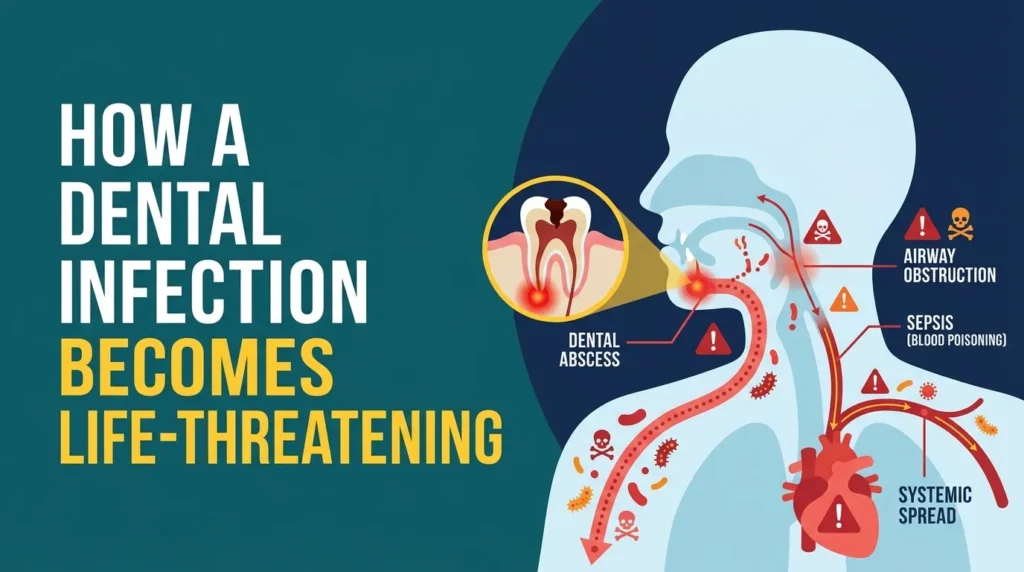
The danger increases when infection spreads beyond its original location.
Infection can enter nearby facial and neck tissues. One serious condition, Ludwig’s angina, affects tissues under the tongue and floor of the mouth. Swelling there can threaten the airway.
Other possible complications include jawbone infection and a brain abscess.
Sepsis is the body’s dangerous response to an infection. It can damage tissues and organs and requires rapid medical treatment. It is not simply another name for bacteria being present in the blood.
These complications are possible outcomes, not inevitable steps that every tooth infection follows. A person cannot identify the route of spread from pain alone.
Why the pain stopping does not prove you are recovering
An abscess may drain and release pressure. The pain can ease even though the source of infection remains.
Pain may also change when the nerves inside an affected tooth become damaged. Neither situation establishes that the infection has cleared.
Consider a hypothetical example: a painful gum bump releases fluid overnight. By morning, the pressure has eased and chewing feels easier. That change is useful information for the dentist, but it is not a reason to cancel the appointment.
Feeling better and removing the infection are different outcomes.
Keep the appointment and explain what changed, including any drainage, swelling or fever.
Can treatment stop the infection and save the tooth?
Yes. Prompt treatment resolves most dental abscesses, and the tooth can often be preserved. The options depend on its condition and whether infection has spread.
| Treatment | What it does | What to understand |
|---|---|---|
| Drainage | Releases pus from the abscess | Further treatment may be needed to address the source. |
| Root canal treatment | Removes infected tissue from inside the tooth | It may preserve a tooth that can be restored. |
| Extraction | Removes the affected tooth | It may be necessary when saving the tooth is not appropriate. |
| Antibiotics | Help manage infection when clinically indicated | They may be used alongside dental treatment. |
| Hospital care | Treats dangerous spread or systemic illness | Airway management, intravenous treatment or surgery may be necessary. |
A dentist may combine these approaches. Releasing pus does not necessarily complete treatment if the infected tooth remains the source.
Why antibiotics are not always the whole treatment
The American Dental Association’s antibiotic guidance prioritizes definitive dental treatment for many localized tooth-related infections in adults who are not severely immunocompromised.
Its 2019 guideline also recognizes circumstances where antibiotics are appropriate, including systemic involvement such as fever or feeling generally unwell. Access to treatment and individual medical circumstances affect the decision.
That means two common assumptions need correcting:
- Every toothache does not automatically require antibiotics.
- Receiving antibiotics does not automatically mean the infected tooth needs no further treatment.
Ask the clinician what procedure or follow-up is required. Do not use leftover antibiotics as a substitute for an examination.
Who was the first person to die from a tooth infection?
There is no reliable worldwide record establishing the first person who died from a dental infection. Naming someone as “the first” would go beyond the available evidence.
A useful historical example is Deamonte Driver, a 12-year-old Maryland boy who died on February 25, 2007, after a tooth infection spread to his brain. His death is documented in the US Congressional Record.
The case shows how serious a dental infection can become. It does not provide a countdown that another patient can apply to themselves.
What about the most recent death?
The latest death worldwide cannot be established from published case reports alone. Not every death is reported publicly, and reports can appear long after the event.
A May 2025 report in Jurnal Respirasi describes a fatal dental-origin infection involving descending necrotizing mediastinitis, a serious infection spreading into the chest.
Its abstract describes untreated pulp gangrene, multiple bacterial infections and coexisting pulmonary tuberculosis. Those additional conditions make it a medically complex case.
The original full report was not accessible during this article’s review, so a detailed death chronology is not presented. It is a recent published report, not a verified claim about the latest death worldwide.
How can you reduce the risk before infection spreads?
Get tooth decay treated promptly and have broken or chipped teeth examined. If you suspect an abscess, seek urgent dental care rather than waiting for pain to become severe.
While arranging treatment, soft foods, gentle brushing and avoiding foods that trigger sensitivity may improve comfort. Suitable over-the-counter pain relief can help, but follow the label and ask a pharmacist if you have medical conditions or take other medicines.
These measures help with symptoms. They do not remove an abscess.
Do not put aspirin directly on a tooth or gum because it can injure the tissue. Do not attempt to cut or drain the swelling yourself.
What if you cannot afford a dentist?
Cost can make the decision harder, but it does not make waiting safer.
The National Institute of Dental and Craniofacial Research lists options for finding lower-cost dental care, including dental schools, community health centers and government-supported programs in the United States. Fees, eligibility and availability vary.
When calling a service, explain that you suspect an infection. Mention swelling, fever, drainage and whether symptoms are worsening. Ask specifically whether they handle urgent dental problems.
If emergency symptoms develop, seek emergency care immediately instead of continuing to compare prices.
Frequently asked questions
Can a tooth infection kill you overnight?
Severe complications can deteriorate rapidly, but there is no reliable overnight risk calculation for an individual. Emergency symptoms require immediate care, regardless of when the tooth first hurt.
Can a tooth abscess heal on its own?
A dental abscess needs professional treatment. Temporary drainage or reduced pain does not confirm that the infection has gone.
Can you tell at home whether an infection has entered your bloodstream?
No. Symptoms may indicate serious illness, but medical assessment is needed to determine what is happening. Seek emergency care if you become confused, short of breath or severely unwell.
Can you have a serious infection without severe tooth pain?
Pain intensity alone cannot establish how serious an infection is. Swelling, swallowing problems and changes in your general condition matter even when tooth pain is mild or has eased.
Will an emergency room fix the infected tooth?
A hospital can treat dangerous complications, but you may still need dental treatment to remove the source. Follow the discharge instructions and arrange the recommended dental follow-up.
If you’re asking how long until a tooth infection kills you, there is no safe countdown. Contact a dentist urgently for a suspected infection. Trouble breathing or swallowing, major mouth swelling, or confusion requires emergency medical care.